Create project
Paste a real business goal, choose the workflow type, and let Hermes preserve the project brief as the source of truth.
Hermes is not limited to outreach. Start with a business objective, generate an agent topology, deploy it to a local runtime, and watch specialized tasks produce records, outputs, approvals, and delivery-ready work.
Five workflow examples. One operating model. Real pages, records, tasks, and outcomes.
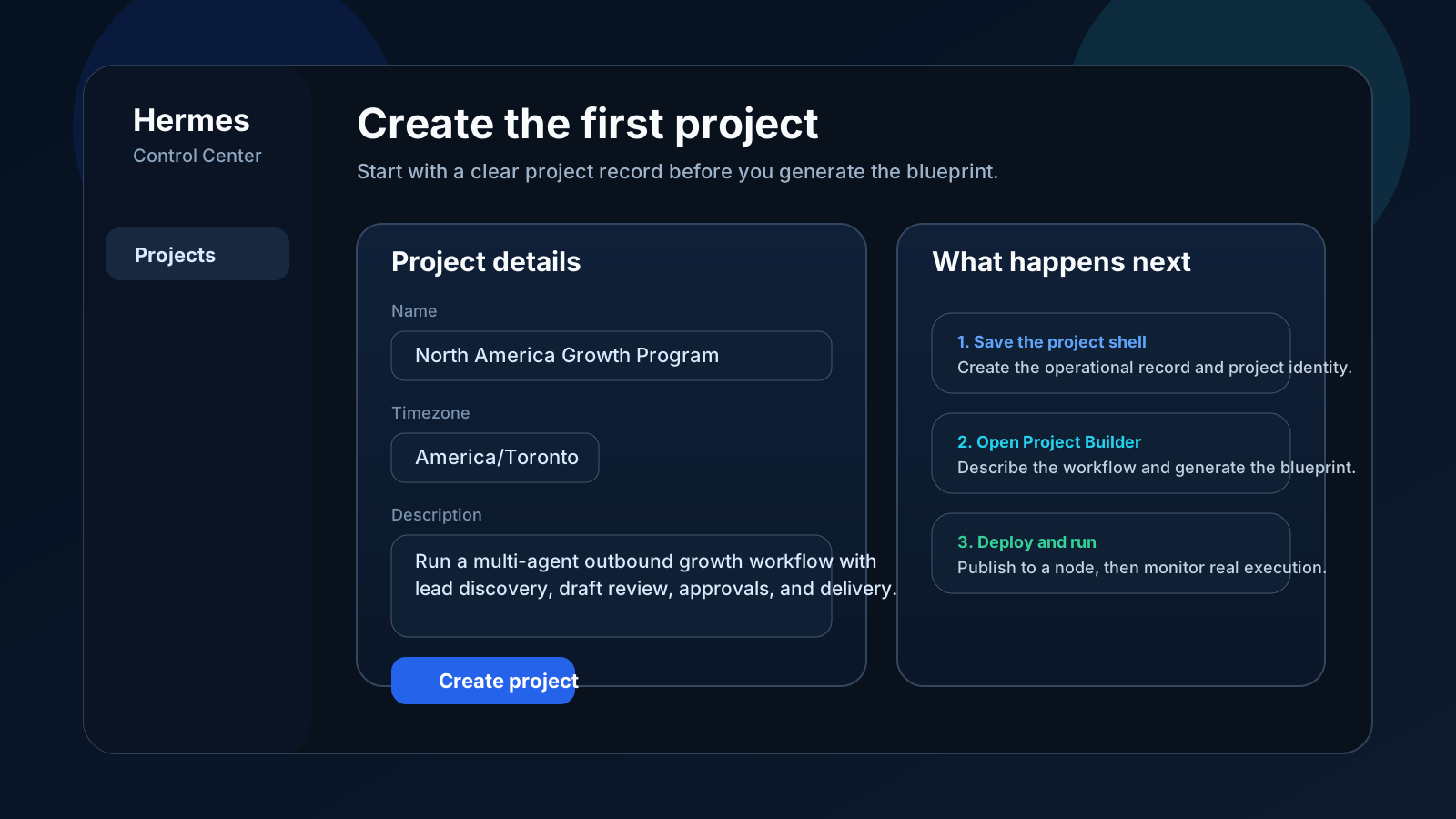
Paste a real business goal, choose the workflow type, and let Hermes preserve the project brief as the source of truth.
Hermes creates supervisors, specialist workers, reviewers, prompts, schedules, artifact contracts, and quality gates.
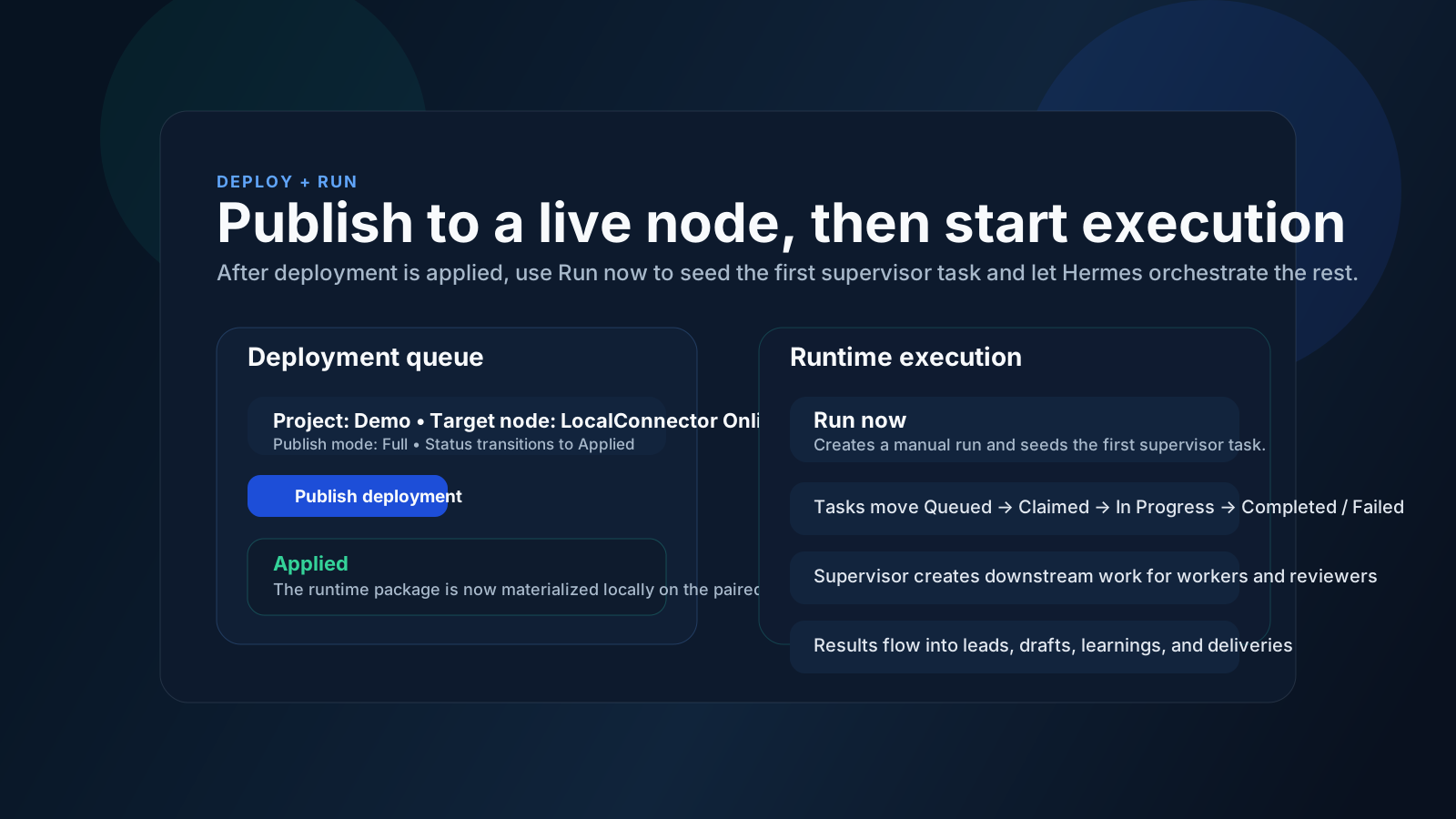
Publish the workflow from the cloud control center to a paired LocalConnector and Hermes runtime you control.
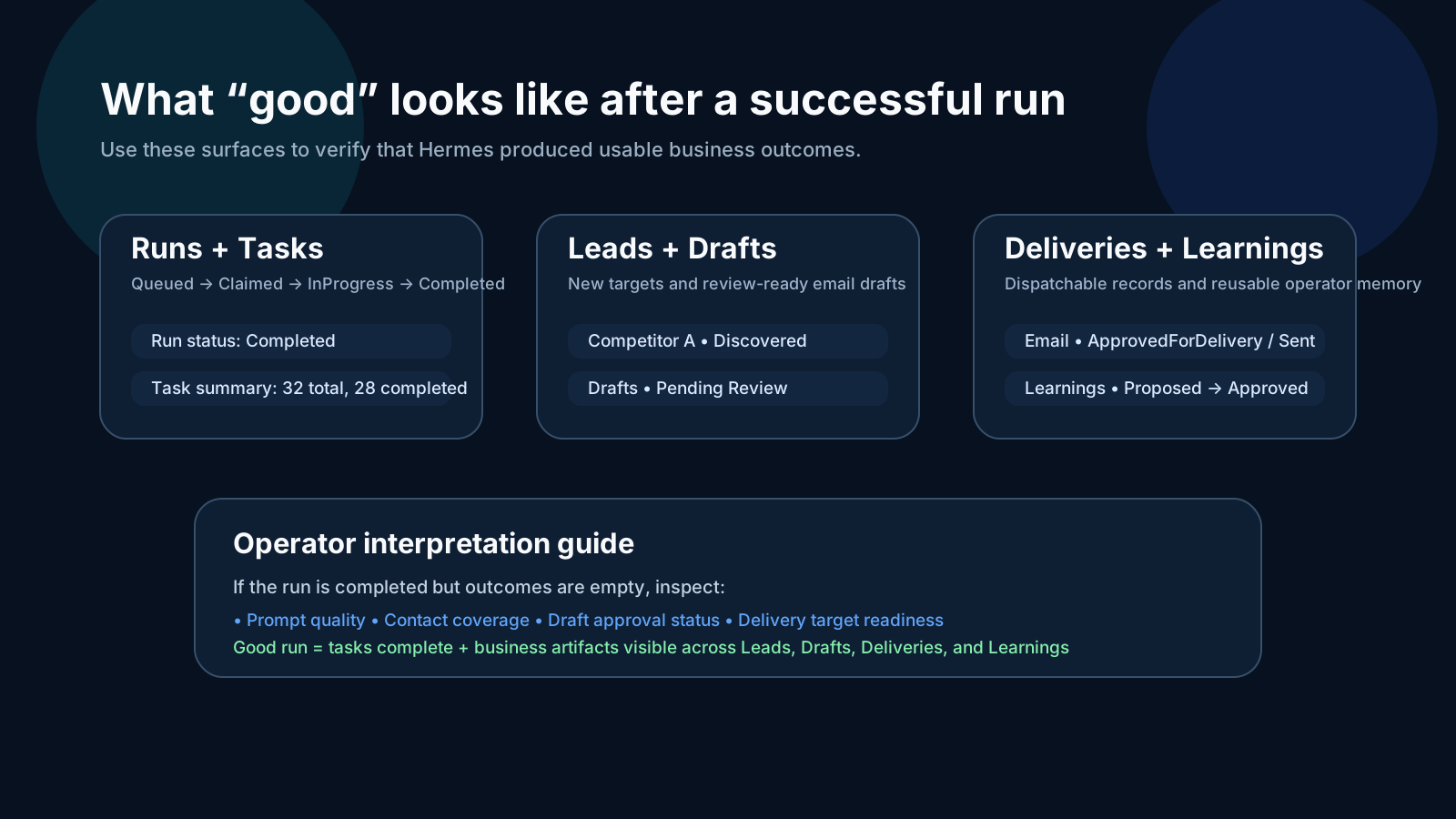
Watch tasks move through Queued, In Progress, Completed, Failed, or Cancelled states while records and outputs are created.
Use Outputs, Approvals, Records, Email Review, Deliveries, and Learnings to turn AI work into approved business outcomes.
Use Hermes as a campaign promotion team that researches high-fit backers, creators, communities, and partners, then prepares reviewable outreach instead of sending generic blasts.
Create a Kickstarter promotion project for Hermes Control Center.
Find high-fit early backers, AI automation creators, SaaS founders, agencies, newsletters, podcasts, and communities in the United States and Canada.
Score each target by relevance, public evidence, audience fit, safe contact channel, and likelihood to share or back the campaign.
Produce personalized email, LinkedIn, X, newsletter, podcast, and community post drafts.
Include the campaign link naturally, mention early access when appropriate, and keep every draft Pending Review until a human approves it.Choose Outreach and GTM, paste the campaign brief, add target audiences, product highlights, proof points, geographic focus, and compliance rules.
Deploy to the active local node so discovery, scoring, and copywriting run through the paired LocalConnector.
Click Run now or use the daily schedule. The run creates discovery, channel, copywriting, review, and summary tasks.
Review drafts, approve the best ones, send only approved outreach, and use learnings to improve the next run.
Break the campaign goal into discovery, channel, copy, review, and reporting work.
Output: Daily mission plan and top priorities.Search public sources for relevant founders, creators, agencies, newsletters, podcasts, and communities.
Output: Qualified targets with fit scores and source URLs.Identify public emails, forms, profiles, and community participation paths without guessing private data.
Output: Contact channels with confidence and risk notes.Use target evidence plus product positioning to produce specific, respectful outreach.
Output: Pending Review email, LinkedIn, X, creator, and community drafts.Reject generic, spammy, unsupported, or risky drafts before approval.
Output: Review decisions, revision notes, and approved assets.
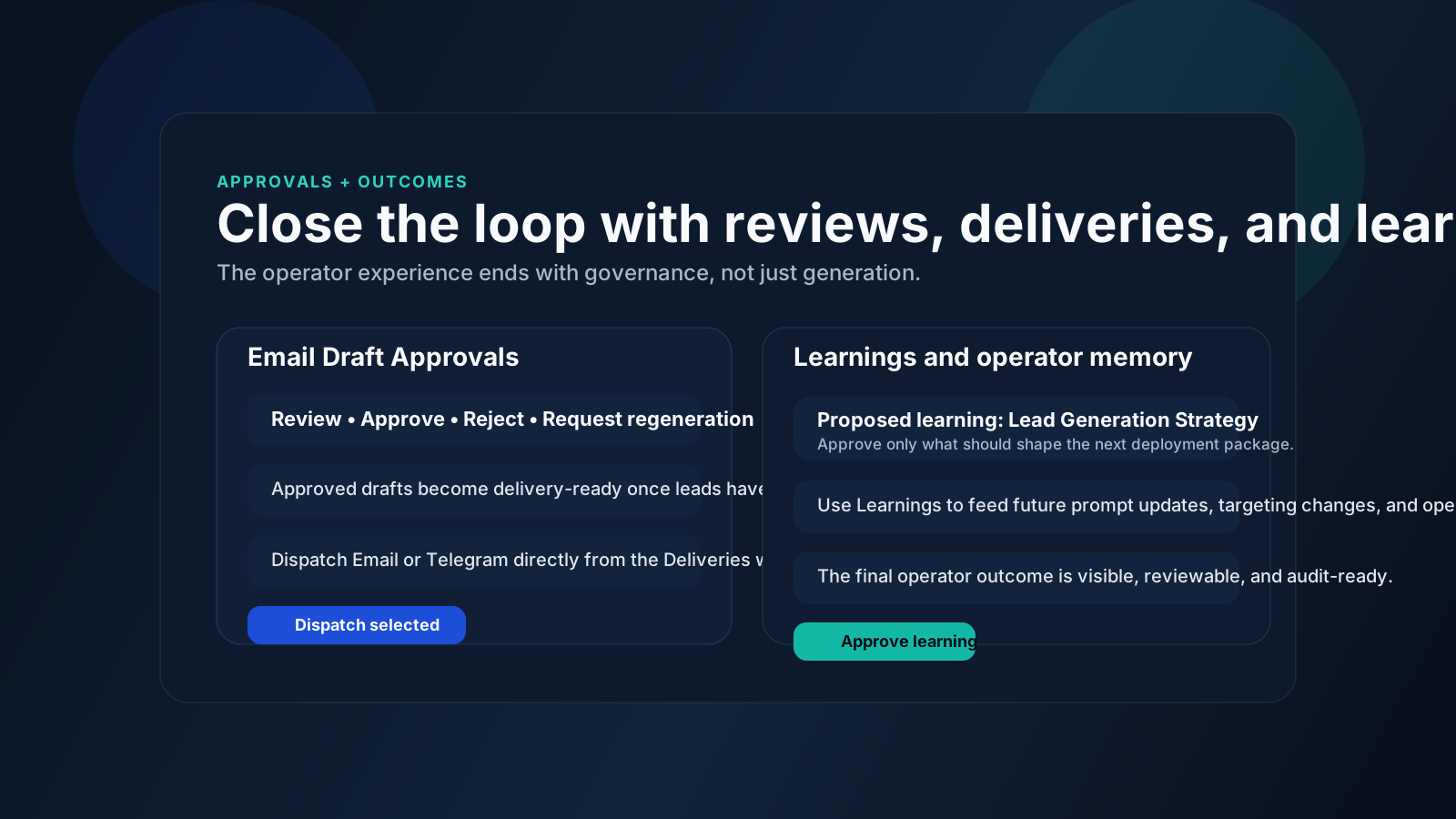
Open Email Review for outbound drafts, Outputs for creator and community assets, Outreach Leads for ranked targets, Outreach Contacts for safe channels, and Learnings for next-day targeting improvements.
Use Hermes as a research analyst team that turns broad questions into sourced findings, ranked competitors, open questions, and an executive-ready decision memo.
Create a research intelligence project for a B2B SaaS company evaluating expansion into Canadian SMB accounting automation.
Research competitors, buyer pains, pricing patterns, integration expectations, content gaps, community discussions, and partnership opportunities.
Capture source URLs, confidence levels, risks, and open questions.
Produce a concise executive brief, ranked recommendations, and a next-research plan.
Separate evidence from inference and mark unsupported claims clearly.Choose Research and intelligence, define the decision question, target market, source quality rules, and what a useful final memo must answer.
Deploy the blueprint to a node with access to the local runtime and any allowed research tools or source files.
Run manually for a one-time study or schedule recurring monitoring. Tasks collect sources, extract findings, synthesize patterns, and review evidence.
Use the final brief to choose market priorities, assign follow-up research, and approve recommendations.
Convert the brief into research questions, source priorities, and acceptance criteria.
Output: Research plan and task assignments.Find public sources, summarize credibility, and capture limitations.
Output: Source notes and evidence records.Compare positioning, features, pricing signals, audiences, and go-to-market patterns.
Output: Entity profiles and competitor comparison.Cluster findings, identify implications, score opportunities, and name unknowns.
Output: Ranked recommendations and open questions.Validate source trail, confidence, unsupported claims, and missing context.
Output: Reviewed decision memo ready for approval.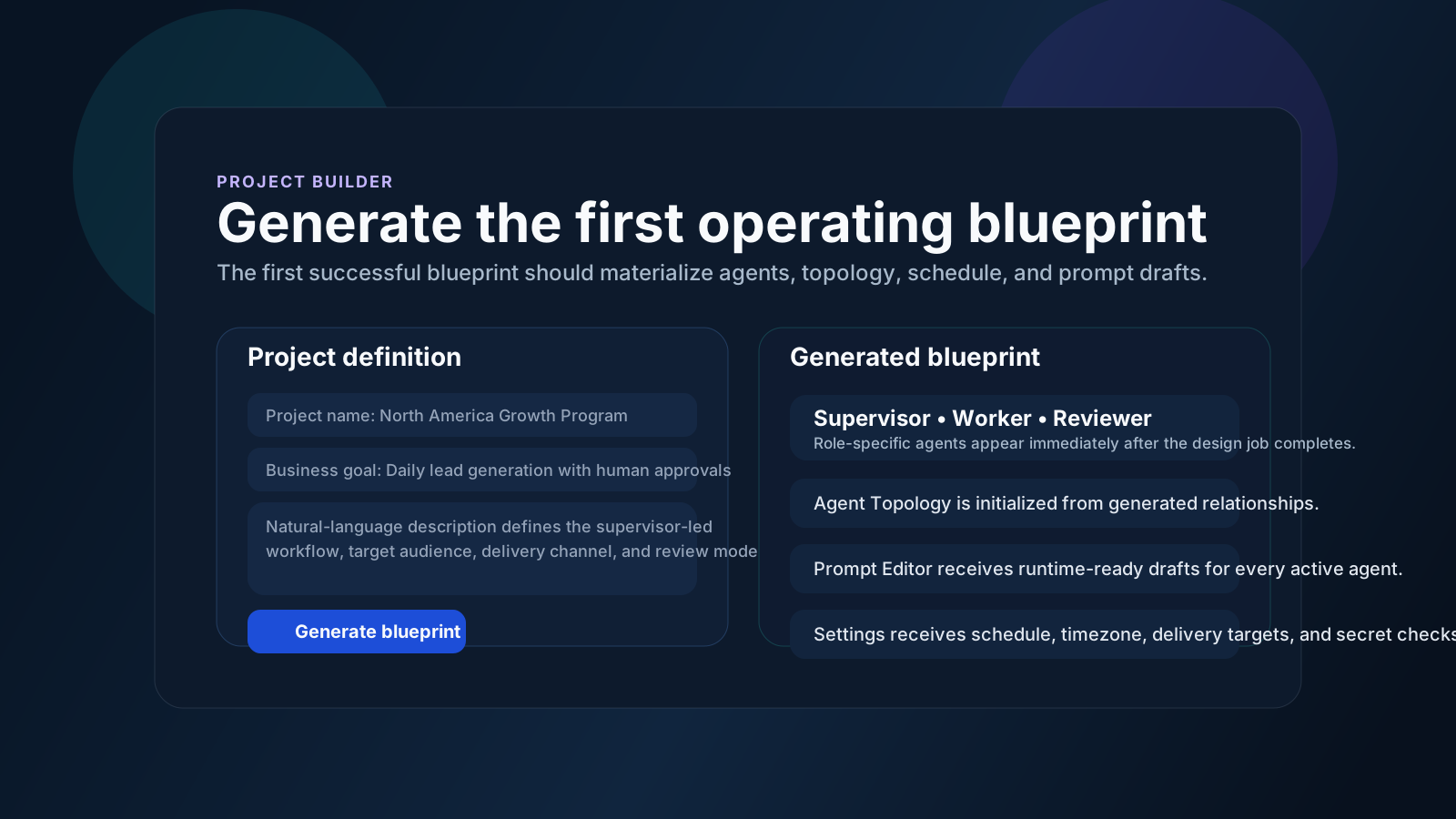
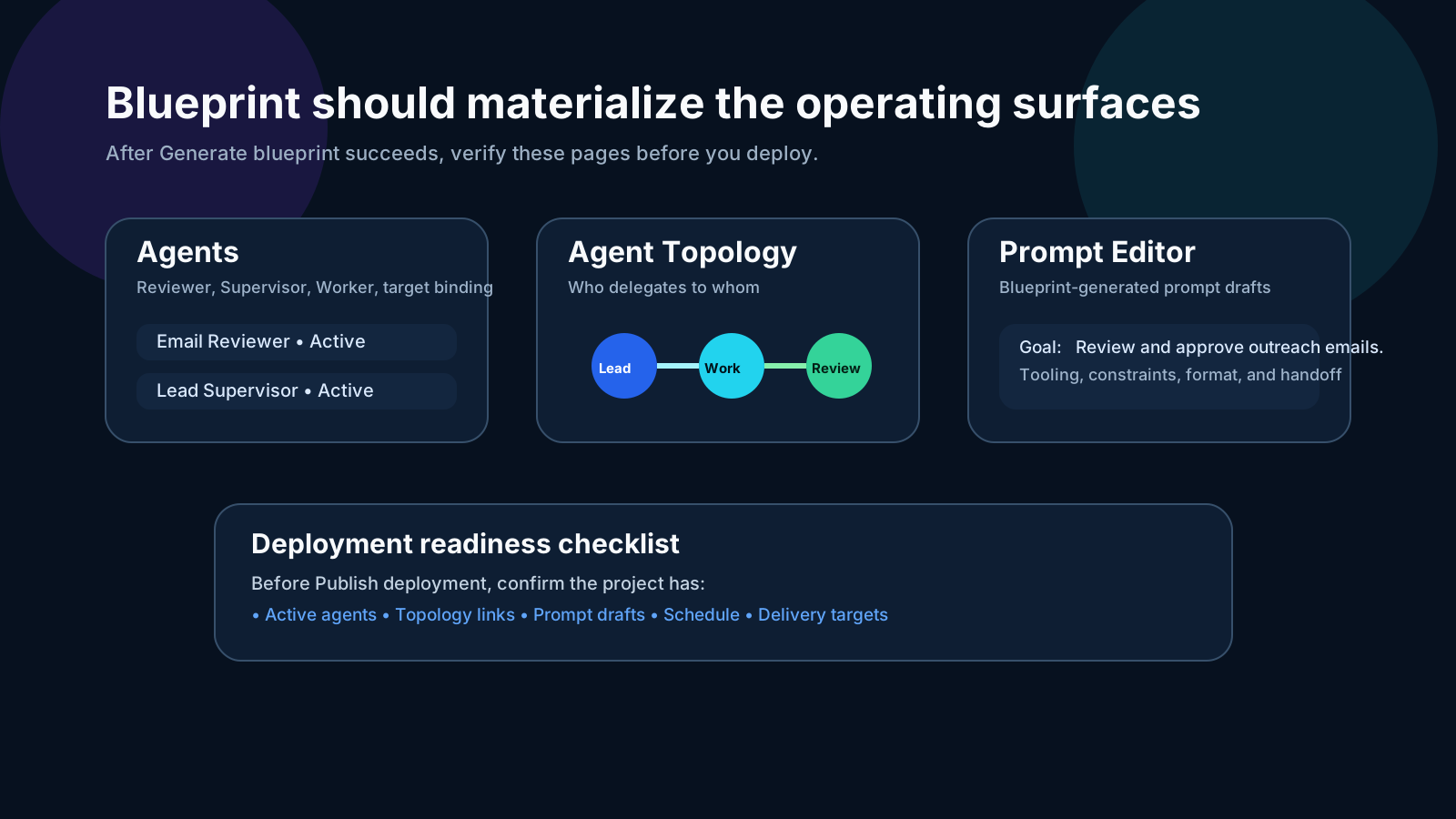
Open Records to audit evidence, Outputs for the executive brief, Approvals to accept the memo, and Learnings to schedule the next intelligence cycle.
Use Hermes as an operations coordinator that reviews active work, identifies blockers, prepares action items, and packages sensitive decisions for approval.
Create a weekly customer onboarding operations project.
Review the onboarding pipeline, identify accounts at risk, summarize blockers, propose owners, draft action items, and prepare escalation notes.
Generate a concise status summary for the leadership team and a handoff note for customer success.
Mark any customer-facing or escalation-sensitive action as Pending Review.
Keep outputs practical, owner-oriented, and usable in the next team meeting.Choose Internal operations, define the operating cadence, owner rules, risk criteria, and what should require approval.
Deploy after connecting the local runtime to the operating context or source documents your team allows it to inspect.
Run before the weekly meeting. The system creates risk review, blocker triage, action planning, runbook, and approval packet tasks.
Use the packet in the meeting, approve escalation notes, and turn action items into follow-up work.
Assign workstream reviews, consolidate status, and enforce approval-sensitive rules.
Output: Weekly operating plan and summary.Identify stalled items, missing inputs, owner gaps, and high-risk accounts.
Output: Work items, blockers, and risks.Turn blockers into owner-specific actions with priority and acceptance criteria.
Output: Action items and handoff notes.Document checklists, escalation paths, and handoff patterns.
Output: Runbook and SOP updates.Check escalation language, customer-facing risks, and decision readiness.
Output: Approval packet and review notes.
Open Outputs for the status packet, Records for blockers and owners, Approvals for sensitive actions, and Learnings to improve the next weekly run.
Use Hermes as a content operations team that researches audience pains, creates angles, drafts channel-specific assets, and keeps publishable content in review.
Create a founder-led launch content project for a new AI operations platform.
Research the audience of SaaS founders, operators, agencies, AI builders, and productivity tool users.
Create content angles around workflow automation, local execution, approvals, research, outreach, and real business outcomes.
Draft LinkedIn posts, X posts, community posts, newsletter copy, founder story posts, and demo CTAs.
Keep every publishable asset Pending Review and flag unsupported claims or tone risks.Choose Content and campaigns, provide audience segments, product positioning, proof points, forbidden claims, channels, and desired publishing cadence.
Deploy to the local node so research, drafting, channel adaptation, and editorial review run as one workflow.
Run daily during the launch window. Tasks generate audience insights, content angles, drafts, variants, and editorial review notes.
Approve publishable drafts, route final assets, and use learnings to improve hooks and channels.
Break the launch into audience, angle, asset, review, and delivery work.
Output: Daily campaign plan.Identify objections, desired outcomes, channel context, and buyer language.
Output: Audience insights and channel findings.Turn audience evidence and product strengths into campaign narratives.
Output: Content angles and brief outlines.Write posts, newsletters, demo CTAs, community posts, and founder notes.
Output: Reviewable post drafts and campaign package.Check clarity, claims, voice, specificity, and channel fit.
Output: Approved drafts or change requests.
Open Outputs for briefs and drafts, Approvals for publish-ready content, Deliveries for final assets, and Learnings for the next content iteration.
Use Hermes for mixed workflows that combine research, planning, decision support, content, approvals, and delivery without forcing everything into an outreach template.
Create an AI operations command project for the executive team.
Each run should inspect the current strategic objective, break it into specialist tasks, gather findings, create decision inputs, propose action items, produce a concise operator brief, and flag anything that needs human approval.
Do not assume this is an outreach project unless the brief explicitly asks for outreach.
Match records and outputs to the objective, keep recommendations grounded, and create follow-up tasks when more work is required.Choose General AI operations for custom or mixed workflows, then describe the operating goal, acceptance criteria, output format, and review rules.
Deploy once the topology looks right. The supervisor and specialist agents will follow the brief rather than a fixed GTM schema.
Run on demand or on schedule. The run creates coordination, specialist, review, synthesis, and follow-up tasks based on the project objective.
Use Records, Outputs, Approvals, Runs, and Learnings as the command layer for ongoing AI-assisted business execution.
Read the objective, create the operating plan, and assign specialist tasks.
Output: Mission plan and task graph.Research, analyze, draft, compare, summarize, or operationalize the exact brief.
Output: Findings, work products, and action items.Combine task outputs into a concise business deliverable.
Output: Brief, recommendation, or decision input.Review evidence, completeness, risks, and whether the output is ready for use.
Output: Review notes and approval packet.Identify missing context, better tasks, recurring issues, and prompt improvements.
Output: Learning notes and follow-up recommendations.
Open Runs to inspect execution, Records for reusable operational memory, Outputs for business deliverables, Approvals for human decisions, and Learnings to tune the workflow over time.